
Concrete Scanning FAQ
Do I Need to Scan a Concrete Slab Before Core Drilling?
Short Answer
Concrete scanning is highly recommended before core drilling to identify the location and depth of reinforcement, post-tension cables, electrical conduits and other embedded services. Scanning helps determine a suitable drilling location, minimising the risk of structural damage, costly repairs and potential safety hazards.

What Can Be Hidden Inside a Concrete Slab?
Concrete slabs can contain a range of structural elements and concealed services that are not visible from the surface. Ground Penetrating Radar (GPR) scanning helps identify potential hazards before core drilling, cutting or other concrete penetrations.
Concrete scanning can assist in locating:
- Steel Reinforcement (Rebar and Mesh) - Identifying reinforcement locations, spacing, direction and concrete cover depth.
- Post-Tension Cables - Locating cables commonly found in suspended slabs, particularly in commercial and multi-storey buildings.
- Electrical and Communication Conduits - Identifying concealed conduits that may contain electrical or data cabling.
- Plumbing and Embedded Pipework - Detecting potential pipework and services concealed within the concrete.
- Voids and Slab Thickness - Assessing potential voids, changes in concrete thickness and other subsurface anomalies where conditions allow.
Concrete scanning provides valuable information to help plan safer drilling locations, minimise damage to embedded services and reduce the risk of compromising structural integrity.
Note: GPR detection capabilities depend on concrete conditions, reinforcement density and scanning depth. GPR cannot reliably determine whether electrical services are live or identify the contents of concealed conduits.
What Can Go Wrong If You Core Without Scanning?
Core drilling without concrete scanning can pose serious safety risks, cause structural damage and result in costly repairs.
Striking concealed electrical conduits can cause electric shock, power outages or damage to essential services. Cutting through post-tension cables or structural reinforcement can compromise the integrity of the concrete and potentially lead to serious safety incidents.
Damage to embedded services or structural elements may also result in project delays, expensive repairs and additional engineering assessments.
Concrete scanning before core drilling helps minimise these risks by identifying potential hazards and suitable drilling locations, protecting workers, structural integrity and project timelines.

How Does Scanning Before Core Drilling Work?
Our experienced technicians use Ground Penetrating Radar (GPR) technology to scan the concrete before drilling. The scanner helps identify the location and depth of reinforcement, post-tension cables, conduits and other embedded objects.
Findings are marked directly onto the concrete surface to help identify suitable core drilling locations and minimise the risk of damaging structural elements or concealed services.
Where site conditions allow, scanning can also provide information on slab thickness, reinforcement spacing, direction and concrete cover depth. A detailed report can be provided upon request for builders, engineers or other relevant trades.
When Is Scanning Most Important?
Concrete scanning is particularly important when drilling into structures where reinforcement, post-tension cables or concealed services may be present.
Scanning is strongly recommended for:
- Suspended and post-tensioned slabs - To identify reinforcement and post-tension cables that could compromise structural integrity if damaged.
- Older buildings - Where construction drawings may be unavailable, outdated or inaccurate.
- Commercial buildings, hospitals and occupied facilities - To minimise the risk of damaging electrical conduits, plumbing and other essential services.
- Large-diameter core drilling - Particularly for plumbing, HVAC and fire service penetrations where multiple structural elements may be encountered.
- Engineer or builder requirements - Where scanning is specified to assess potential hazards before concrete penetrations.
Concrete scanning helps reduce risks, prevent costly damage and identify suitable drilling locations before work begins. Scanning findings should be reviewed by a structural engineer where required, particularly for suspended or post-tensioned slabs.
Can I Skip the Scan If I Have the Building Plans?
While building plans provide valuable information, they don’t always reflect the actual location of reinforcement, post-tension cables or embedded services. Changes during construction, concrete placement and subsequent renovations can result in variations from the original drawings.
Concrete scanning provides an assessment of what is actually within the slab, helping identify potential hazards before drilling. Even with building plans available, scanning is highly recommended to minimise the risk of structural damage, service strikes and costly repairs.
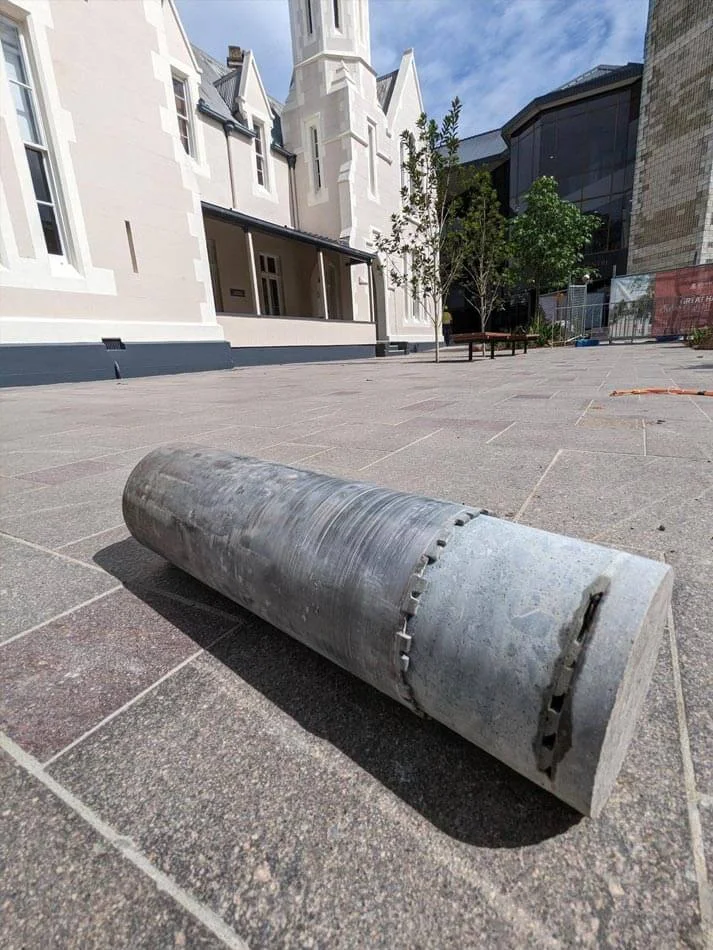
Scanning and Core Drilling From One Team
Conscan scans and cores, so the same team that finds the hazards drills the holes. That means one booking, no handover gaps and accurate placement. We work across Brisbane, the Gold Coast, Sunshine Coast, Ipswich, Toowoomba and interstate, 24 hours a day, 7 days a week.
Planning a core hole? Call Conscan on 0499 499 798 or contact us online to book a scan. Learn more about our concrete scanning and core drilling services.